
Choosing the right kitchen splashback is about much more than looks. The best splashback protects your walls, copes with heat and steam, is easy to clean and also ties your worktops and cabinets together. This guide walks through every popular option, so you can confidently choose the right kitchen splashback for your home.
Table of Contents
What is a kitchen splashback
A kitchen splashback is a solid panel or tiled area on the wall behind your hob, cooker, sink or worktop. It protects the wall from steam, grease, food splashes and water and it can also become a strong design feature in the room.
Common places for splashbacks include:
- Behind the hob or cooker
- Behind the sink
- Along the worktop as a continuous wall panel
- As a feature wall behind an island or range cooker
Main types of kitchen splashbacks
Tile splashbacks
Ceramic and porcelain tiles are a classic choice for kitchen splashbacks and are still one of the most popular options.
Advantages
- Very heat resistant and safe behind all hob types
- Huge choice of colours, sizes and patterns including metro tiles, mosaics and patterned tiles
- Individual cracked tiles can be replaced without changing the whole area
- Can be a very budget friendly choice with simple white tiles
Disadvantages
- Grout lines can stain and need regular cleaning and sometimes sealing
- More time consuming to install and often needs a professional tiler
- Not as sleek or seamless as a solid splashback panel
Best for
Homeowners who like a classic or patterned look, enjoy tile texture and want lots of layout options such as brick bond, herringbone or geometric mosaics.
Glass kitchen splashbacks
Glass kitchen splashbacks are usually made from toughened safety glass that is very strong and heat resistant. They can be clear, coloured, printed, mirrored or even show a photograph.
Advantages
- Toughened glass can withstand high temperatures around hobs and ovens when installed correctly
- Non porous surface with no grout lines so it is hygienic and easy to wipe clean
- Reflective surface helps small or dark kitchens feel brighter and bigger
- Can be made in almost any colour or custom design so it suits modern kitchens very well
Disadvantages
- Usually more expensive than tiles and acrylic panels especially for large walls
- Can crack if hit hard or if fitted badly near strong heat sources
- Scratches cannot be polished out easily so badly damaged panels may need replacement
Heat and safety
Toughened glass is suitable behind electric, induction and gas hobs when it is correctly specified. Guides suggest that glass behind a gas hob should be toughened and normally kept at around one hundred and fifty millimetres or more from the burner for safety, and fitted in line with local gas regulations.
Best for
People who want a sleek, glossy and modern look with strong colours like black glass splashbacks, white glass splashbacks or bold teal and red tones.
Acrylic and polyvinyl chloride kitchen splashbacks
Acrylic and polyvinyl chloride wall panels give a similar glossy look to glass but at a lower cost and with simpler fitting.
Advantages
- More affordable than glass and stone and often sold as cheap kitchen splashbacks
- Lightweight and easier to cut and drill on site which suits do it yourself projects
- Very wide choice of colours including white, grey, green, blue, copper, marble effect and patterned looks
- Seamless panels with no grout so they are quick to wipe clean and hygienic
Disadvantages
- Standard acrylic cannot cope with the high heat from gas burners and should not be fitted directly behind a gas hob
- More prone to scratches than glass and stone so needs soft cloths and non abrasive cleaners
- Can look less premium than glass or stone in very high end kitchens
Heat and hob type
Suppliers explain that acrylic is fine behind electric and induction hobs but is not suitable behind open gas flames because it can soften or discolour. For gas hobs you usually combine acrylic panels around the kitchen with a glass or metal cooker splashback behind the burners.
Best for
Busy family kitchens that need low cost, bright colour options and easy cleaning. Also good for large kitchen wall panels and tile effect panels where you want minimum joints.
Laminate kitchen splashbacks and wall panels
Laminate kitchen splashbacks use the same type of decorative laminate as many worktops. They are often sold as kitchen splashback panels and worktop splashbacks that match or contrast with your surfaces.
Advantages
- Often more affordable than glass and stone while giving a similar look such as marble effect or stone effect
- Supplied in long lengths so you can cover large areas above worktops with few joints
- Easier and quicker to install than tiles and can often be cut and fitted on site
Disadvantages
- Standard laminate isn’t as heat resistant as stone or glass so a metal or glass panel is still advised directly behind a very hot hob
- Joints and edges must be sealed well to stop water getting in
Best for
People who want matching kitchen worktops and splashbacks, such as marble effect splashbacks with marble effect laminate tops, or wood and walnut effect splashbacks for a warmer look.
Stone and quartz and granite and marble splashbacks
Stone splashbacks can be made from natural granite and marble or from engineered quartz. They are often installed to match the kitchen worktop, which creates a seamless and very luxurious finish.
Advantages
- Very high heat resistance which makes them ideal behind hobs when fitted correctly
- Extremely durable and long lasting with excellent stain and scratch resistance in quartz
- Creates a beautiful continuous look when the same slab continues from the worktop up the wall, with vein matching through the corner
- Easy to clean with warm soapy water and no grout lines
Disadvantages
- Usually one of the most expensive options, especially for large splashback walls
- Heavy material so it needs professional templating and fitting
Best for
High end kitchens where you want a stone, quartz or marble splashback to match premium worktops and create a feature wall behind a range cooker or along the main run.
Stainless steel and metal kitchen splashbacks
Stainless steel splashbacks are common in professional kitchens but they are also used in modern homes, often behind the hob only.
Advantages
- Very heat resistant and safe behind all hob types including gas
- Non porous and very easy to wipe down which is ideal for heavy cooking
- Strong industrial look that suits minimalist or commercial style kitchens
Disadvantages
- Shows fingerprints, streaks and water marks if not dried and buffed carefully
- Can scratch if you use abrasive pads or harsh cleaners
- Can feel a little cold or industrial in softer family kitchens
Cleaning tips
Specialist guides recommend warm soapy water or mild stainless steel cleaner, soft cloths, and cleaning along the grain. They warn against bleach, abrasive powders and scouring pads which can scratch and dull the surface.
Best for
Cookers and hob splashbacks in serious cooking spaces and modern grey or black kitchens, often combined with quartz or laminate elsewhere.
Wooden splashbacks and upstands
Wooden splashbacks and timber upstands are less common than other options. Often they are used together with a separate heat resistant cooker splashback in glass, tile or metal.
Advantages
- Warm and natural feel especially in country and Scandinavian style kitchens
- Matches wood worktops and can give a seamless look around the room
Disadvantages
- Needs careful sealing to cope with moisture and steam
- Not suitable close to a gas hob unless combined with a non combustible panel because wood is combustible
Best for
Short upstands along the back of wood worktops plus a separate cooker splashback in a more heat resistant material.
Kitchen splashback ideas and colour trends
Recent kitchen trends in the United Kingdom show that splashbacks are no longer just plain white tiles. Homeowners are using this area to bring colour and personality into the room.
Popular ideas include:
- Bold jewel tone glass splashbacks in emerald green or deep blue that contrast with neutral cabinets
- Patterned tiles in Moroccan or geometric designs to create a feature wall behind the cooker
- Herringbone layouts using metro tiles for a twist on the classic white splashback
- Stone splashbacks with dramatic marble veining as a statement behind an island hob
- Metallic splashbacks in copper, brass or brushed steel for a warm and modern feel
- Mirrored splashbacks to bounce light around and make small kitchens feel larger
- Tile effect wall panels in polyvinyl chloride or laminate for an easy fit version of popular tile looks
Colour wise, white splashbacks and grey splashbacks remain very popular as safe choices that work with most cabinets. At the same time deep green splashbacks, blue splashbacks, black splashbacks and marble effect splashbacks feature strongly in current trend guides.
How to choose the right kitchen splashback
Step one: think about how you cook
If you cook a lot with a gas hob or range, heat resistance and safety are essential.
- Behind a gas hob the safest choices are toughened glass, ceramic or porcelain tiles, stone, quartz, granite, marble and stainless steel, all fitted to manufacturer guidelines.
- Acrylic and standard laminate are not suitable directly behind gas burners but can be used elsewhere in the kitchen.
If you have an electric or induction hob, you have more flexibility. Acrylic and laminate panels can usually be used behind these hobs if you follow supplier guidance, because there is no open flame and the heat at the wall is lower.
Step two: decide how much wall you want to cover
You can use a splashback in different ways.
- A small cooker splashback just behind the hob or oven
- A run of splashback panels along the whole worktop
- Full height splashbacks that go from worktop to wall cupboards or even up to the ceiling
Stone suppliers note that typical splashback heights are around four hundred and fifty to five hundred and fifty millimetres between worktop and wall cabinets, but this can vary with your kitchen design.
Covering a smaller area behind the hob in glass or stone and using more affordable tiles or panels elsewhere is a popular way to keep costs under control.
Step three: think about cleaning and maintenance
Consider how much effort you realistically want to spend.
- If you hate scrubbing grout, solid splashback panels in glass, acrylic, laminate, stone or stainless steel are much easier to wipe clean.
- If you like texture and pattern more than a flat panel, tiles offer endless design options but will need more maintenance.
For the easiest cleaning choose:
- Glass splashbacks with minimal joints
- Acrylic or polyvinyl chloride wall panels with smooth surfaces and sealed edges
- Quartz or stone splashbacks that match the worktops
- Stainless steel panels cleaned with the correct gentle products
Step four: match the style of your kitchen
Think about your cabinets, worktops and flooring.
- Modern high gloss kitchens work very well with coloured glass splashbacks, acrylic splashbacks or stone slabs with bold veining.
- Shaker and traditional kitchens suit classic white tiles, metro tiles, marble splashbacks or soft patterned tiles.
- Industrial style kitchens often use stainless steel splashbacks, dark quartz, concrete effect panels and black splashbacks.
Try to repeat one or two key colours from your cabinets or worktop in your splashback. For example a white kitchen with grey worktops can look great with a grey splashback or a bold green splashback as a strong accent.
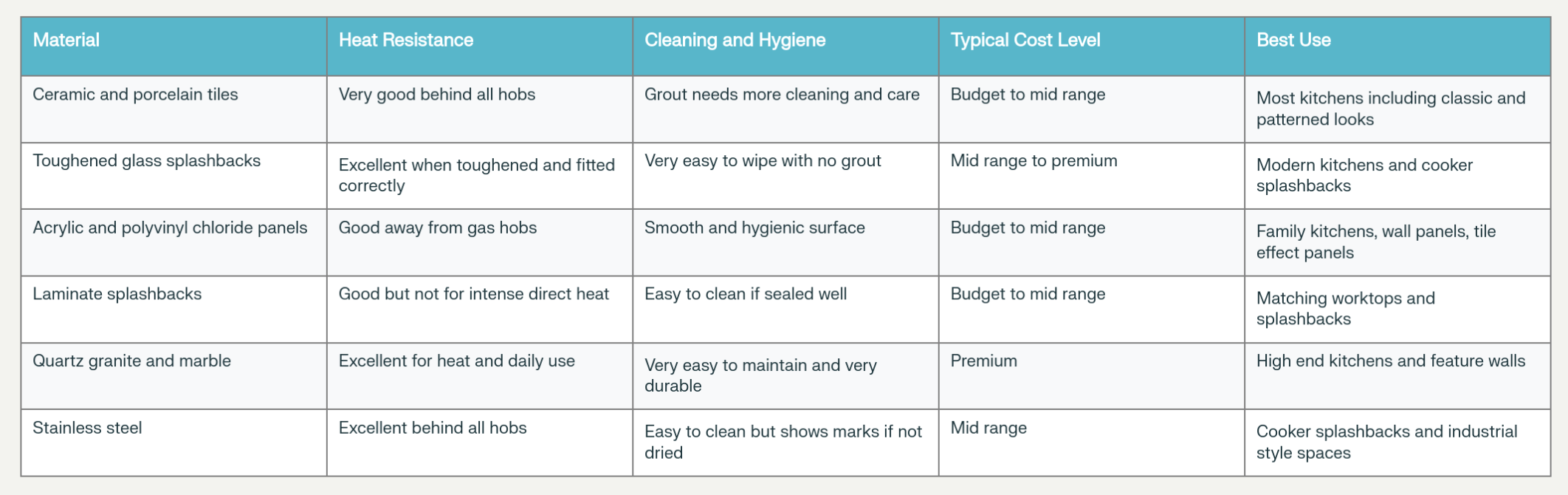
Quick comparison of popular kitchen splashback materials
Safety and regulations around hobs and splashbacks
There are two main things to think about.
Distance and clearances
Maker and gas safety guides often recommend a minimum distance between gas burners and any wall or splashback. One guide suggests around one hundred and fifty millimetres between a gas hob and a glass splashback, and gas regulations state that combustible materials within around three hundred millimetres of a gas burner should be fire resistant or shielded. Always read your hob installation instructions and follow local gas rules.
Material choice near flames
- Toughened glass, stone, ceramic tiles and stainless steel are suitable near high heat when installed correctly.
- Acrylic, standard laminate, upvc and bare wood are not suitable directly next to gas burners because they can soften, scorch or burn.
When in doubt, ask a qualified kitchen fitter or gas safe engineer to check your design.
Fitting and caring for your kitchen splashback
Measuring and ordering
- Measure the width and height carefully and check for sockets, switches and window sills
- Many suppliers offer made to measure glass, acrylic and quartz splashbacks and will cut socket holes for you
- For large glass or stone panels a professional templating service is strongly advised
Basic fitting methods
Different materials use different fixings.
- Glass, acrylic and laminate panels are usually bonded to the wall with strong adhesive once the surface is clean, flat and dry. Some acrylic suppliers also offer pre drilled holes for screw fixings.
- Tiles are fixed with tile adhesive and then grouted
- Quartz and stone splashbacks are normally bonded by professionals because of the weight and precision required.
Always follow manufacturer instructions for the exact product you choose.
Cleaning and maintenance tips
- Glass splashbacks
Use a soft cloth and a standard glass cleaner or a mild soapy solution for daily cleaning. Avoid abrasive pads that can scratch the surface. - Acrylic and laminate splashbacks
Wipe with a soft cloth and mild detergent. Do not use harsh chemicals or abrasive creams because they can cause scratches and dull patches. - Stainless steel splashbacks
Clean with warm soapy water or a recommended stainless steel cleaner, then dry and buff along the grain. Avoid bleach, scouring pads and strong abrasive powders. - Tile splashbacks
Clean tiles with a non abrasive cleaner and pay special attention to grout lines. Sealing grout can help reduce staining over time. - Stone and quartz splashbacks
Use pH neutral cleaners and a soft cloth. Many quartz and stone products are naturally stain resistant and wipe clean easily.
Regular gentle cleaning will keep any splashback looking fresh for many years.
What is the best material for a splashback behind a gas hob
The safest choices behind a gas hob are toughened glass, ceramic or porcelain tiles, quartz, granite, marble and stainless steel, all installed to the hob makers instructions and local gas regulations. Acrylic, laminate and untreated wood should not sit directly next to open flames.
Are laminate and acrylic kitchen splashbacks heat resistant
Laminate and acrylic panels will cope with everyday steam and splashes and they are fine behind many electric and induction hobs when fitted correctly. However suppliers clearly warn that standard acrylic should not be used directly behind gas burners and laminate also has limits close to very high heat.
How high should a kitchen splashback be
In many kitchens the gap between worktop and wall units is around four hundred and fifty to five hundred and fifty millimetres, and stone splashbacks are often made to this height. If you have no wall units you can choose any height you like, from a small upstand to a full wall feature. Just make sure the splashback covers the full cooking and washing area so your walls are protected.
What is the easiest splashback to keep clean
The easiest splashbacks to keep clean are solid panels without grout lines, such as glass splashbacks, acrylic and polyvinyl chloride wall panels, laminate splashback panels, quartz and stone slabs and stainless steel panels. Tiles are still practical but the grout will always need more care and occasional refreshing.
Which colour splashback works best in a small kitchen
In a small kitchen, light colours and reflective surfaces help make the space feel bigger. White splashbacks, pale grey panels and mirrored or light coloured glass splashbacks all bounce light around the room. However a bold coloured cooker splashback, such as emerald green or rich blue, can also work well if the rest of the kitchen is simple and neutral.